Blog
Our insights


Our insights
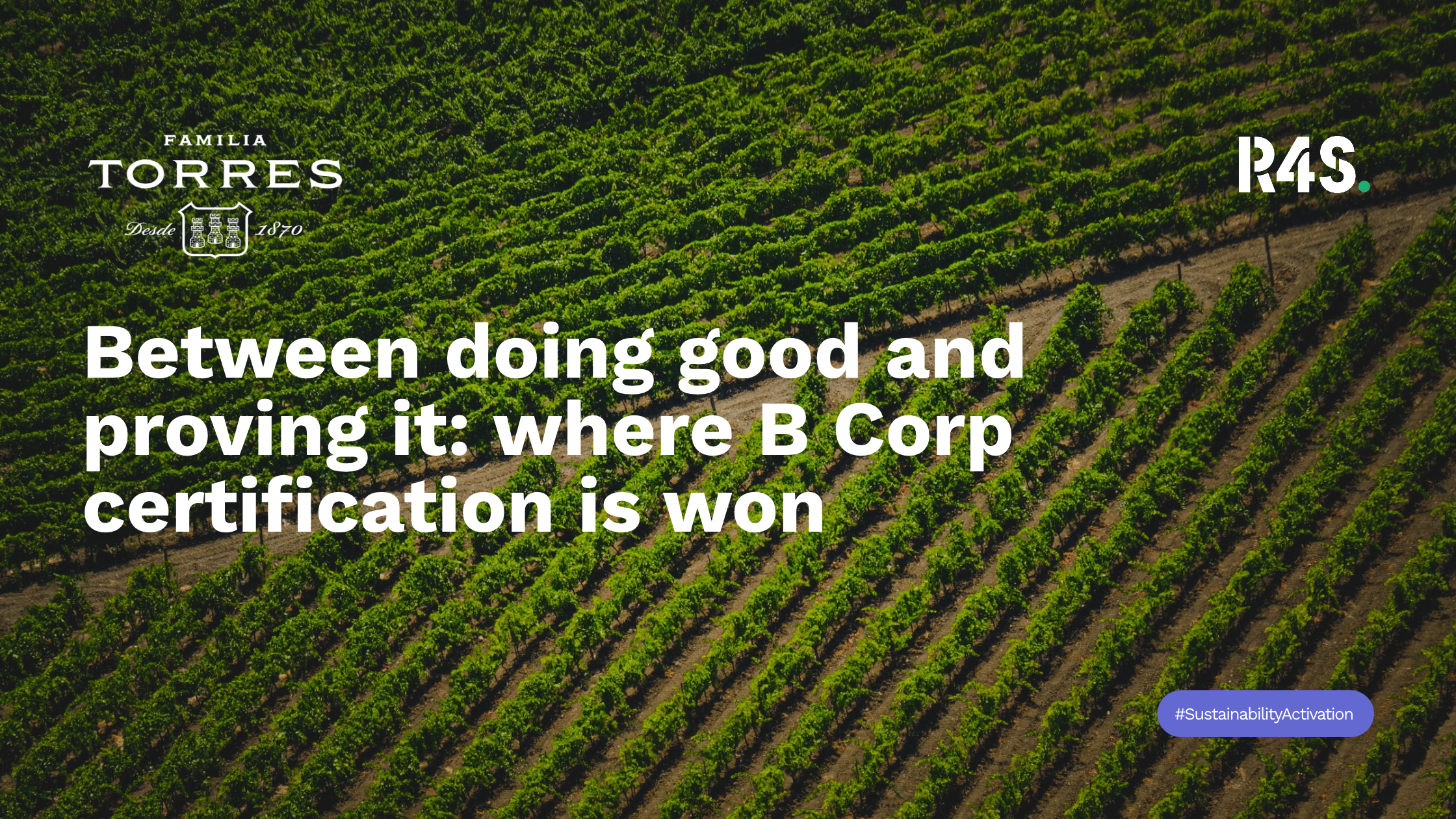
For many organisations, the certification is not a reputational milestone but a strategic tool. Holding yourself to a demanding external standard forces you to measure your impact rigorously, pinpoint where there is room for improvement, and show third parties that your commitment to sustainability delivers verifiable results, not just good intentions.
When they set out on the certification journey, companies like Familia Torres, which have been working in this direction with rigour and conviction for years, run into a challenge: it isn’t the practice they lack, but documenting it in a way that lets assessors check it and verify compliance against standards that, quite simply, were not designed for the wine world.
Familia Torres needs no introduction in the wine world. With more than 150 years of history in Penedès and a presence in over 100 countries, the company made a pioneering move for the sector in 2008: at a time when climate change was still largely an academic debate, it became one of the first wineries in the world to calculate its carbon footprint, covering both direct and indirect emissions. That was the starting point of a deep transformation which, eighteen years on, has made the company one of the business world’s climate benchmarks.
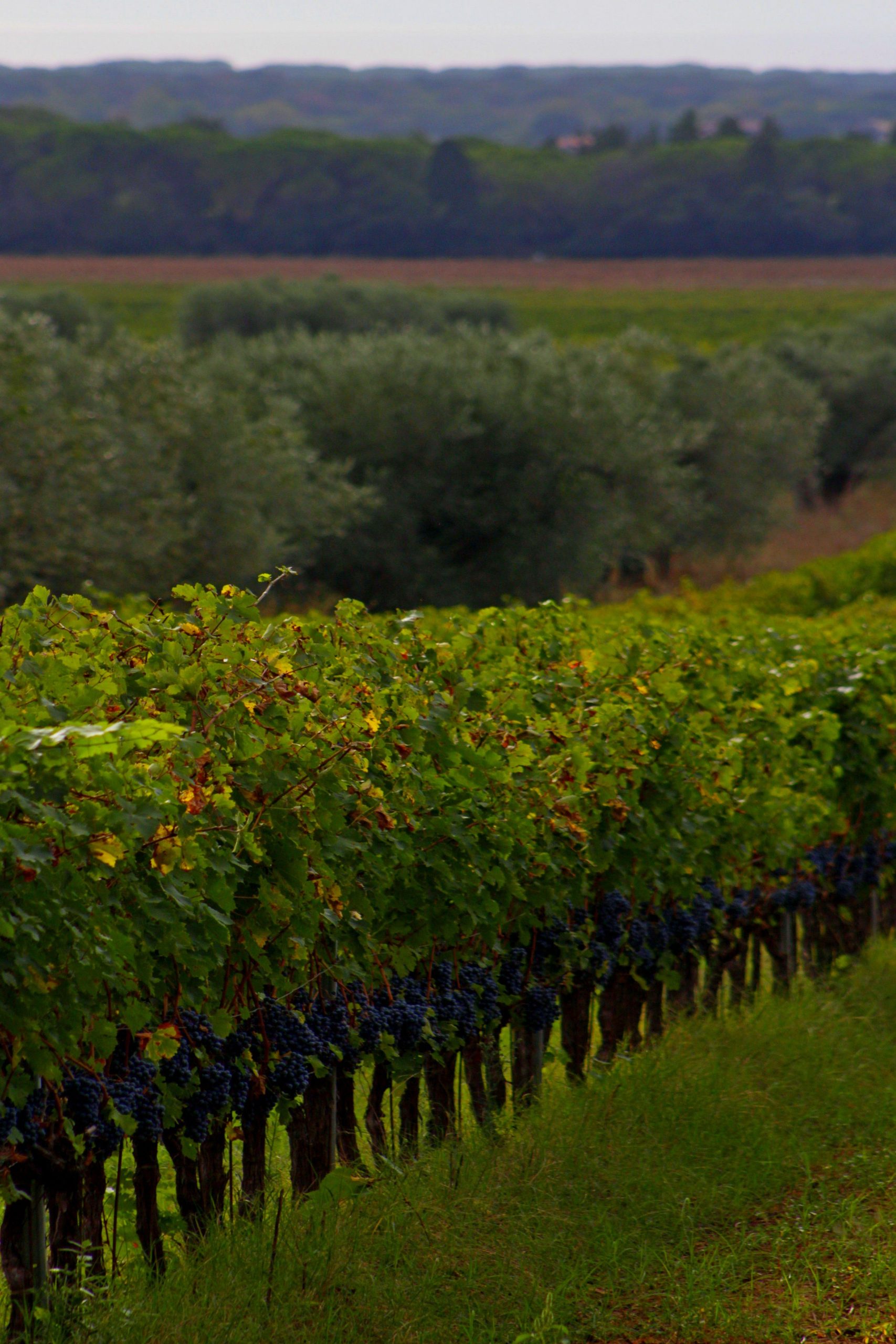
One of the most ambitious bets along the way is regenerative viticulture, a model Familia Torres has been rolling out since 2020 and which, by the end of 2025, was already in place on 504 of its 900 hectares of vineyards in Catalonia.
It’s worth pausing here for a moment. Regenerative viticulture is not the same as organic production. Organic farming is defined mainly by what it removes: synthetic pesticides and fertilisers. Regenerative farming goes a step further and is defined by what it builds: living soils. Rather than treating the land as a passive medium in which vines grow, it actively helps the soil recover its health, structure and microbial life. In practice, that means minimal tillage to preserve soil structure, permanent cover crops to protect against erosion, composting with the vineyard’s own residues, and bringing back biodiversity and grazing. The result is land that holds more water, copes better with drought and, above all, stops emitting CO₂ and becomes a sink that captures it.
That last point is key. In conventionally worked soil, organic matter oxidises and releases carbon into the atmosphere. In regenerated soil, the carbon stays locked underground. The vineyard literally goes from being part of the problem to being part of the solution.
Familia Torres’s achievement needs to be framed accurately. The regenerative viticulture the company practises is indeed pioneering in the wine world, but regenerative agriculture as such is nothing new. Its core practices go back centuries and took shape as a modern system in extensive and dryland crops (cereals, forage, vegetables) during the 1970s and 1980s, when no-till farming was already spreading across hundreds of thousands of hectares. Vineyards, by contrast, have come late to this shift: its systematic application in viticulture is very recent and still emerging, without fully harmonised definitions or metrics. The reason is not a lack of will, but agronomy. The vine is a perennial crop, with permanent roots that compete with cover crops for water, and the balance between plant vigour, yield and grape quality is a delicate one. You can’t simply transfer the playbook from a wheat field, replanted every year, to a vine that has to live for decades. Every practice has to be rethought and adjusted to the specific terrain. This is precisely where the value of Torres’s work lies: adapting regeneration to a crop that made it especially difficult, and doing so at operational scale and with measured results.
Just as Familia Torres didn’t adapt its vineyards to a regeneration manual designed for other crops, but adapted regeneration to the demands of the vineyard, the certification process followed the same logic: the point was to read the B Corp standard in light of the company’s reality, not the other way round. Familia Torres brought the work and the ambition; at R4S, we brought our B Corp expertise to build the bridge between its practices and the standard.
B Corp is a global, multi-sector standard. Until the new standards arrived, it assessed a tech company, a consultancy, a textile factory and a winery under the same framework. The new standards introduce sector-specific requirements, but in a case like Familia Torres the reference framework is still broad: viticulture is a highly specific activity within a diverse agricultural sector, and no sector standard on its own captures its timescales and particularities. That breadth is both the B Corp movement’s strength and its difficulty. So how does such a specific practice, so closely tied to the land and to nature’s rhythms as regenerating vineyard soil, fit in?
Working alongside Familia Torres through the process, we at R4S saw that the real hurdle would be closing two specific gaps:
The first gap was evidence. A good practice doesn’t score on its own: it has to be turned into auditable documentation, indicators and data. Here, Familia Torres’s technical work was exemplary. The company made the most of its data on carbon footprint, water use and organic soil amendments, linked it to the findings of its R&D projects in regenerative viticulture, and benchmarked it against leading scientific literature.
That rigour made it possible to quantify the impact in a defensible way. Under B Corp’s innovation model, Torres’s regenerative viticulture was substantiated through the efficiency relative to past performance route, which requires demonstrating a reduction of at least 50%. Taking average emissions for 2020–2021 as the baseline and comparing them with 2024, net CO₂ emissions per hectare fell by 52.59%. One methodological detail deserves attention: the per-hectare metric was chosen over per-bottle precisely to isolate the effect of soil management from harvest variability, which was heavily affected by drought in those years. And the carbon sequestration factor applied (1,730 kg CO₂/ha/year, from the Vitiregenere operational group project, with IRTA’s participation) was deliberately kept at the low end of the scientific literature. In other words, it was a conservative estimate. When a figure has to withstand an auditor’s scrutiny, credibility counts for more than impressive numbers.
The second gap was one of explanation. We needed to help the assessors understand a very particular agronomic reality: that soil regeneration is measured not in quarters but in years (research suggests it takes 5 to 10 years to see significant changes in soil carbon), and that the transition phase can even temporarily increase some emissions before reducing them. Explaining nature’s own timescales so that they read not as a weakness but as proof of long-term robustness was an essential part of our work.
R4S’s expert team built the bridge between Familia Torres’s technical knowledge and the language of the B Corp model. Our approach was to interpret a demanding standard we know inside out, adapt it to the company’s real context, and support the Familia Torres team in building evidence robust enough to be verified by a third party holding itself to the highest standards.
For certification to be truly strategic, at R4S we interpret the standard in light of each company’s good practices. But the relationship works both ways: the standard also transforms. Where we spot gaps, certification pushes the organisation to improve, and it is often companies themselves that drive positive change in order to meet it.
Josep Maria Ribas Portella, Climate Change Manager at Familia Torres, sums it up well when asked about the main lesson from the process:
“Demonstrating the benefits of regenerative viticulture within a standard as demanding as B Corp has been both a major challenge and a great opportunity. On the one hand, it was quite a challenge to distil a practice with such far-reaching impact. We learned to make the most of our data on carbon footprint, water use and organic amendments; to link that information to the findings of our R&D projects in regenerative viticulture; and, finally, to benchmark it against other leading scientific publications. On the other hand, the exercise has given us a great opportunity: today we can talk about regenerative viticulture at Familia Torres with a narrative that is solid, clear and backed by B Corp Certification. It allows us to explain the real impact of the way we work in the vineyard clearly, consistently and verifiably.“
As a result, regenerative viticulture was recognised in the B Corp assessment, linked to cross-cutting areas the standard values, such as biodiversity, soil health and water management. A practice specific to the wine world found its place in the universal language of certification.
This recognition also opens a door that goes beyond a single company. Mireia Torres Maczassek, Director of Innovation and Sustainability at Familia Torres, puts it in the context of the wider sector:
“Having B Corp validation reinforces, with evidence and credibility, that this model is the right strategy for the future of vineyards and wine. Regenerative viticulture fosters biodiversity in vineyard ecosystems and fixes organic carbon in the soil, helping to mitigate environmental impact while improving soil structure and health over the long term, which makes vineyards more resilient to the effects of climate change.“
This commitment to leading by example takes shape in the Regenerative Viticulture Association (AVR), which Familia Torres co-founded as a reference space where growers and wineries can share experience and knowledge, promote regenerative viticulture certification (Organic Regenerative Viticulture Alliance – ORVA) to bring rigour and credibility to the model, and link the added value of wine to responsible, sustainable practices.
The Familia Torres case offers a lesson for any company that is serious about creating positive impact: when it comes to certifying sustainability, the challenge doesn’t end with putting good practices in place, but when you manage to document, quantify and explain them so that a demanding, global external framework can verify them.
Doing it well is the first step. Being able to prove it is what turns conviction into a recognised asset. And that, more often than not, is the bridge that makes the difference.
R4S supported Familia Torres through its B Corp certification process. If you’d like to explore how to translate your organisation’s good practices into a verifiable framework recognised internationally by businesses and the public, get in touch and let’s talk about your case.